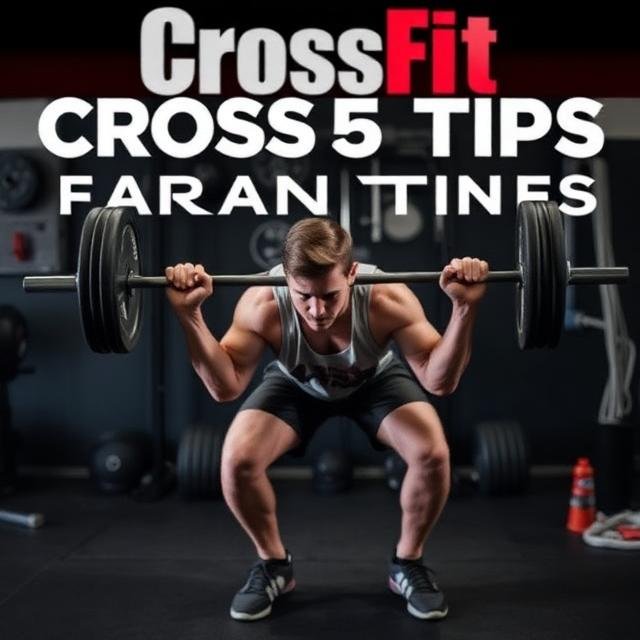
So, you’re thinking about starting CrossFit? First of all — welcome to the chaos… the good kind. CrossFit can look intimidating from the outside. Barbells flying, people flipping tires, intense workouts with names like “Fran” or “Murph.” It’s loud, it’s fast, and it’s competitive. But here’s the truth: CrossFit is also one of the most supportive and beginner-friendly training environments when approached the right way.
If you’re new, you don’t need to be in elite shape. You don’t need to lift heavy. You don’t need to know Olympic lifting. You just need the right mindset and a smart plan.
Let’s break down the best CrossFit training tips for beginners so you can start strong, avoid injury, and actually enjoy the process.
🧠 Understand What CrossFit Really Is
Before jumping in, let’s clarify something important: CrossFit isn’t just random high-intensity exercise. It’s a structured fitness methodology built around three main elements:
- Functional movements
- Constant variation
- High intensity
That means you’ll squat, press, pull, jump, run, row, and lift in different combinations. The goal? Build strength, endurance, agility, coordination, and overall athletic performance.
The workouts (often called WODs — Workout of the Day) are designed to challenge multiple energy systems at once. But here’s the key for beginners: intensity is relative. Your version of intensity will look different from someone who’s been training for five years — and that’s perfectly fine.
🏋️ Focus on Form Before Intensity
This is the golden rule. It’s tempting to move fast and keep up with others in class, but speed without control is a recipe for frustration — or worse, injury.
Spend your early weeks mastering:
- Proper squat depth
- Hip hinge mechanics
- Safe overhead positioning
- Core bracing
- Controlled barbell movement
CrossFit includes technical lifts like cleans, snatches, and jerks. These are powerful movements, but they require patience. Don’t rush progression. Think of technique as building the foundation of a house. Without it, everything else collapses.
📉 Scale Every Workout (And Don’t Feel Bad About It)
Scaling is not weakness — it’s intelligence.
CrossFit workouts are designed to be adaptable. That means:
- Lighter weights
- Fewer reps
- Modified movements
- Reduced workout time
If a workout calls for pull-ups and you can’t do one yet, use resistance bands or ring rows. If it calls for heavy barbell cleans, lower the weight or use dumbbells.
The goal isn’t to finish first. The goal is to finish safely and consistently.
🗓️ Don’t Train Every Single Day
When beginners get excited, they often go too hard, too fast. CrossFit is demanding. Your body needs time to adapt.
Start with:
- 3 workouts per week
- Rest days in between
- Light mobility work on off days
You’ll build endurance and strength gradually. Jumping into six days per week immediately can lead to burnout or overuse injuries.
Remember — fitness is a marathon, not a sprint.
💪 Build Strength Alongside Conditioning
CrossFit includes both conditioning and strength components. As a beginner, don’t neglect the strength side.
Strength training helps:
- Improve movement efficiency
- Increase muscle resilience
- Prevent injury
- Boost long-term performance
If your gym offers strength-focused sessions, take advantage of them. Building a stronger squat, press, and deadlift will make everything else feel easier over time.
🔄 Learn to Pace Yourself
One of the biggest mistakes beginners make? Going all-out in the first two minutes of a workout.
CrossFit workouts often last 8–20 minutes (sometimes longer). If you sprint at the beginning, you’ll gas out quickly.
Instead:
- Start at 70–80% effort
- Focus on smooth breathing
- Maintain consistent movement
- Push harder in the final round
Think of it like running a race. Smart pacing wins.
🥗 Prioritize Nutrition and Hydration
CrossFit demands energy. If you’re under-fueled, workouts will feel miserable.
Focus on:
- Balanced meals with protein, carbs, and healthy fats
- Staying hydrated before, during, and after workouts
- Eating enough to support recovery
You don’t need a complicated diet. Just consistent, quality nutrition.
😴 Recovery Is Non-Negotiable
You’ll feel sore. That’s normal. But recovery determines how well you progress.
Make sure you:
- Sleep 7–9 hours per night
- Stretch after workouts
- Use foam rolling for tight muscles
- Take rest days seriously
Your body grows stronger during recovery — not during the workout itself.
🤝 Embrace the Community
One of the most powerful parts of CrossFit is the community. It’s not just a gym — it’s a support system.
People will cheer for you, encourage you, and celebrate your small victories. That environment helps beginners stick with training long-term.
Don’t compare yourself to others. Compare yourself to who you were last week.
⚠️ Avoid Common Beginner Mistakes
Let’s keep you ahead of the curve. Here are mistakes to avoid:
- Skipping warm-ups
- Ignoring mobility
- Lifting too heavy too soon
- Training through pain
- Competing instead of learning
Progress happens when ego stays in check.
📈 Track Your Progress
CrossFit is measurable. That’s one of its strengths.
Track:
- Workout times
- Weights lifted
- Reps completed
- Skill progressions
Watching numbers improve over weeks is incredibly motivating.
🏆 Final Thoughts
Starting CrossFit can feel overwhelming, but it doesn’t have to be. Approach it with patience. Focus on movement quality. Scale intelligently. Recover properly. And most importantly, enjoy the process.
You don’t need to be fit to start CrossFit. You start CrossFit to get fit.
Stick with it, trust the process, and you’ll be amazed at how quickly your strength, endurance, and confidence improve.