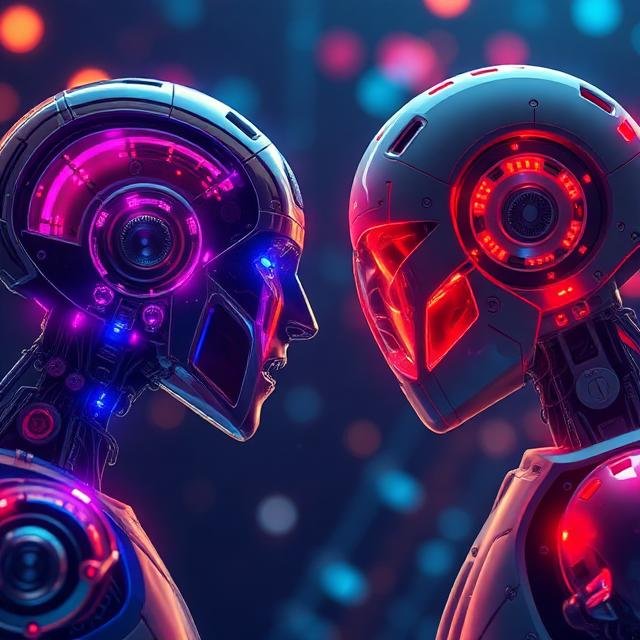
As we move deeper into the 2020s, innovation continues at a pace that would have seemed futuristic just a few years ago. By 2025, several cutting-edge technologies are expected to reshape industries, transform everyday life, and redefine what’s possible. Here’s a look at the most exciting emerging technologies to watch in 2025.
🧠 1. Artificial Intelligence Gets Smarter
Artificial Intelligence (AI) already powers many tools we use daily, but in 2025, it’s set to become even more intelligent and influential.
- Context-aware AI: Systems that understand not just data but meaning and intent.
- AI in healthcare: Faster diagnostics, personalized treatments, and predictive health monitoring.
- Autonomous decision-making: From self-driving cars to smart manufacturing, AI will make systems more adaptive and efficient.
AI won’t just be smarter—it’ll be everywhere.
🔗 2. 6G and Next-Gen Connectivity
While 5G continues to expand worldwide, research and development on 6G connectivity are accelerating.
- Blazing-fast speeds: Expected to be up to 100x faster than 5G.
- Ubiquitous connectivity: Seamless internet access, with reduced latency across the globe.
- Support for immersive tech: Essential for augmented reality (AR), virtual reality (VR), and interconnected devices.
6G will unlock possibilities we’re only beginning to imagine.
🧬 3. Genomics and Personalized Medicine
Genomics—the study of our DNA—is revolutionizing medicine, and by 2025, it will become more mainstream.
- Personalized treatments: Tailored therapies based on your genetic profile.
- Real-time health monitoring: Early detection of diseases before symptoms appear.
- Gene editing breakthroughs: Tools like CRISPR are becoming more precise and accessible.
Medicine is shifting from one-size-fits-all to custom-designed care.
🪩 4. Extended Reality (XR) Goes Mainstream
Extended Reality (XR), a blend of VR, AR, and Mixed Reality (MR), is evolving beyond gaming and entertainment.
- Virtual workspaces: Redefining remote collaboration in business.
- Education and training: Immersive simulations for learning real-world skills.
- Retail experiences: Try-before-you-buy shopping in virtual environments.
XR will blur the lines between physical and digital worlds.
🤖 5. Human–AI Collaboration Tools
Instead of replacing humans, AI tools in 2025 will be designed to collaborate with us.
- AI assistants for creativity: Helping with writing, design, and music creation.
- Enhanced problem solving: AI that works side by side with humans in research and innovation.
- Workplace productivity: Tools that automate routine tasks so people can focus on strategy and creativity.
The future of work will be about teamwork between humans and machines.
🔋 6. Green Tech and Clean Energy Innovation
Climate-focused technologies are no longer optional—they’re essential.
- Next-generation batteries: Faster charging, longer life, and safer materials.
- Affordable renewable energy: Solar, wind, and new clean power systems becoming more accessible.
- Carbon capture and utilization: Turning emissions into useful materials.
Tech innovation is now deeply linked with sustainability.
🛡️ 7. Cybersecurity Reinvented
As technology becomes more interconnected, cybersecurity must advance too.
- AI-powered threat detection: Automated defenses that learn from attacks in real time.
- Blockchain for security: Decentralized identity and data protection.
- Zero trust architecture: No device or user is automatically trusted — ever.
Security in 2025 won’t just be stronger—it’ll be adaptive.
📦 8. Robotics and Automation Everywhere
Robots are no longer just industrial machines—they’re becoming more human-friendly and capable.
- Service robots: Helping with logistics, healthcare, and customer service.
- Collaborative robots (cobots): Working safely with human teams in factories and offices.
- Drone innovation: Aerial delivery, surveying, and environmental protection.
From warehouses to hospitals, robots will be hard at work.
📈 Final Thoughts
2025 promises a wave of technologies that will touch every aspect of life—from how we work and communicate to how we heal and explore. What’s most exciting isn’t just the technology itself, but how it empowers us to solve complex global challenges and unlock new forms of creativity and connectio