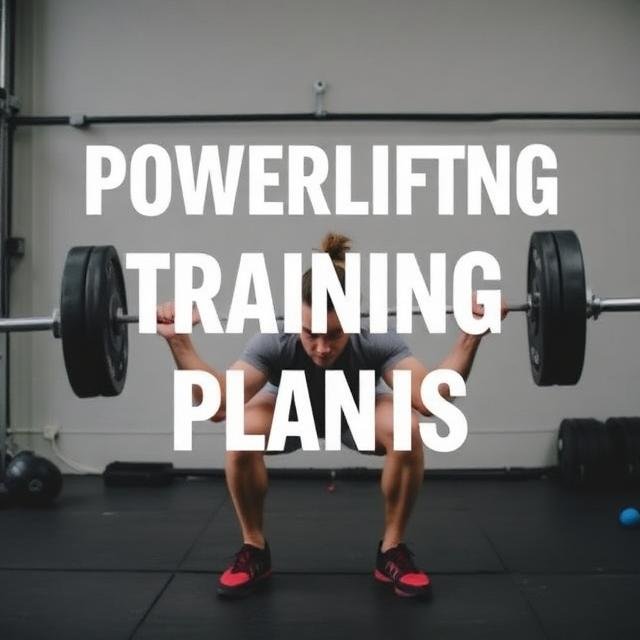
So you want to get into powerlifting? That’s awesome. There’s something incredibly empowering about loading a barbell, stepping under it, and proving to yourself that you’re stronger than you were yesterday. But if you’re brand new, it can feel overwhelming. What lifts should you focus on? How often should you train? How heavy is too heavy?
Don’t worry — this guide breaks down everything you need to know about creating a powerlifting training plan for beginners. We’ll keep it simple, practical, and effective. No fluff. No confusion. Just a clear path to getting strong safely and consistently.
💪 What Is Powerlifting?
Powerlifting is a strength sport centered around three main lifts:
- Squat
- Bench Press
- Deadlift
That’s it. No fancy machines required. The goal is simple: lift as much weight as possible for one repetition in each lift. Your total score is the combined weight of your best squat, bench, and deadlift.
But here’s the important part — as a beginner, your focus isn’t maxing out every week. It’s building technique, consistency, and steady strength progress.
🧠 Why Beginners Should Follow a Structured Plan
If you just walk into the gym and randomly lift heavy weights, you’ll stall fast. Worse, you might get injured. A structured powerlifting program gives you:
- Progressive overload (gradual strength increases)
- Balanced muscle development
- Proper recovery
- Technical practice on the main lifts
- Clear goals and direction
Think of it like learning to drive. You don’t start on the highway going 90 mph. You start slow, master the basics, and build confidence.
📅 How Often Should Beginners Train?
For most beginners, 3–4 training days per week is ideal.
Why? Because your body needs time to recover and adapt. Strength gains don’t happen during the workout — they happen when your body repairs itself afterward.
A simple weekly layout might look like:
- Day 1: Squat Focus
- Day 2: Bench Focus
- Day 3: Deadlift Focus
- Optional Day 4: Technique & Accessories
Rest days are not weakness. They’re part of the plan.
🏋️ The Core Lifts: Technique First, Weight Second
Before we talk numbers, let’s talk form. Perfect technique is your foundation.
🦵 Squat
Focus on:
- Feet shoulder-width apart
- Chest up, back tight
- Hips breaking first
- Full depth (hips below knees)
- Driving through your heels
Start lighter than you think you need. Mastering control builds confidence.
💥 Bench Press
Focus on:
- Shoulder blades squeezed together
- Feet planted firmly
- Controlled descent
- Explosive press upward
Your setup matters as much as the press itself.
🏋️ Deadlift
Focus on:
- Bar close to your shins
- Neutral spine
- Tight core
- Driving through your legs
- Standing tall at lockout
Never rush deadlifts. Precision prevents injury.
📈 Progressive Overload for Beginners
The secret to getting stronger? Add a little weight over time.
As a beginner, you can typically increase weight every week — sometimes even every session. This phase is often called “newbie gains,” and it’s powerful.
A simple progression might look like:
- Add 5 pounds to upper body lifts each week
- Add 5–10 pounds to lower body lifts each week
- Keep reps consistent
Small increases compound quickly. Patience wins.
🗓️ Sample 3-Day Beginner Powerlifting Program
Here’s a simple, effective program:
Day 1 – Squat Focus
- Squat: 3 sets of 5 reps
- Bench Press: 3 sets of 5 reps
- Lat Pulldowns or Rows: 3 sets of 8 reps
- Planks: 3 rounds
Day 2 – Deadlift Focus
- Deadlift: 3 sets of 5 reps
- Overhead Press: 3 sets of 5 reps
- Dumbbell Lunges: 3 sets of 8 reps each leg
- Hamstring Curls: 3 sets of 10 reps
Day 3 – Bench Focus
- Bench Press: 3 sets of 5 reps
- Squat (light technique work): 3 sets of 5 reps
- Barbell Rows: 3 sets of 8 reps
- Core Work (Pallof Press or Cable Rotations): 3 sets
This program emphasizes frequency without overwhelming volume.
🔁 How Long Should You Run This Plan?
Stick with a beginner powerlifting program for at least 8–12 weeks.
You’ll know it’s time to change when:
- You can no longer add weight consistently
- Progress stalls for multiple weeks
- Recovery becomes difficult
Until then, consistency beats complexity.
🛡️ Injury Prevention for Beginners
Strength training is safe when done correctly. But beginners often make mistakes like:
- Lifting too heavy too soon
- Skipping warm-ups
- Ignoring mobility
- Training through pain
Always start sessions with 5–10 minutes of dynamic warm-ups:
- Bodyweight squats
- Arm circles
- Hip mobility drills
- Light warm-up sets
Listen to your body. Muscle soreness is normal. Sharp joint pain is not.
🥗 Nutrition Tips for Beginner Powerlifters
You can’t build strength without fuel.
Here’s what matters most:
- Eat enough calories to support growth
- Consume adequate protein (about 0.7–1 gram per pound of bodyweight)
- Stay hydrated
- Get 7–9 hours of sleep
Recovery isn’t optional — it’s your secret weapon.
📊 When Should Beginners Test Their Max?
Beginners don’t need to max out often. In fact, testing 1-rep maxes too frequently can slow progress.
Instead:
- Estimate your max using 3–5 rep sets
- Test every 12–16 weeks
- Focus on consistent strength increases, not ego lifts
Strong foundations lead to impressive numbers later.
🚀 Common Beginner Mistakes to Avoid
Let’s keep you ahead of the curve. Avoid these:
- Program hopping every few weeks
- Comparing yourself to advanced lifters
- Neglecting accessory work
- Ignoring rest days
- Sacrificing form for weight
Progress in powerlifting is a marathon, not a sprint.
🏆 Final Thoughts
Starting a powerlifting journey is one of the most rewarding things you can do in the gym. It teaches discipline, patience, and resilience. A simple beginner program focusing on the squat, bench press, and deadlift — performed consistently with good form — will build impressive strength faster than you think.
You don’t need advanced techniques. You don’t need fancy equipment. You need commitment, structure, and patience.
Stick to the basics. Add weight gradually. Recover properly. Stay consistent.
And most importantly — enjoy the process of becoming stronger every wee